Per user, calibrated in seconds. Company wide, in under four weeks. Every revenue uplift or cost reduction initiative, including ours, transparently measured by the Value Tracker. Free with every deployment. Selective partnerships only.
Buying, trading and merchandising teams have been cut. Data sits in fragments across Shopify, SAP, ERP, merchandising systems, marketplaces and third party tools. Pricing decisions get made in gut meetings on Monday mornings. The market intelligence platforms that promised to fix this give your team reporting. They do not give your team decisions. And every week a new AI vendor lands in the inbox claiming to solve all of it.
Buying, trading, merchandising and finance each hold a partial picture. No single source of truth.
Decisions rely on memory and instinct, not on what actually drove margin last season.
Tools that show you what competitors are doing. Your team still has to work out what to do about it.
Fewer pricing analysts, fewer merchandisers, same commercial targets. More work per head.
A new platform every week. No clarity on what to adopt, how to integrate, or how it pays back.
The reason these problems persist is that the three options retailers have reached for over the last decade do not solve them. You have probably tried at least one. You may have tried all three.
Beautiful charts. Live competitor pricing. Sell through trends. Then your team still has to walk into the trade meeting with a spreadsheet and a point of view. The dashboard goes unopened by week six.
A six figure deck. A six month engagement. Real insight while the team is in the room. The day they leave, the operating rhythm reverts. The strategy lives in a deck nobody opens. The next merch director arrives and starts again.
Most AI startups are built to ship and integrate as fast as possible to as many clients as possible. Generic by design. No bespoke client delivery. No depth of care for your specific operating model. The demo dazzles. The deployment disappoints. Six months in, the tool is on the shelf.
We are not a tool you log into. We are an orchestration layer that sits across your stack, calibrated to how your business actually runs.
The strategy gets built with your team. It gets calibrated into the system. Then the system runs it. Week after week. Agent after agent. Decision after decision. Your buyers still buy. Your traders still trade. Your merchandisers still allocate. They do it in minutes, with reasoning and evidence, in your house style. And every recommendation is traceable back to its cause.
You do not buy software. You buy a strategic operating model. It happens to be software delivered.
The system works because of five capabilities, each built specifically for the realities of fashion retail. Each one took years to get right. Together they are what makes COORD different from anything else in market.
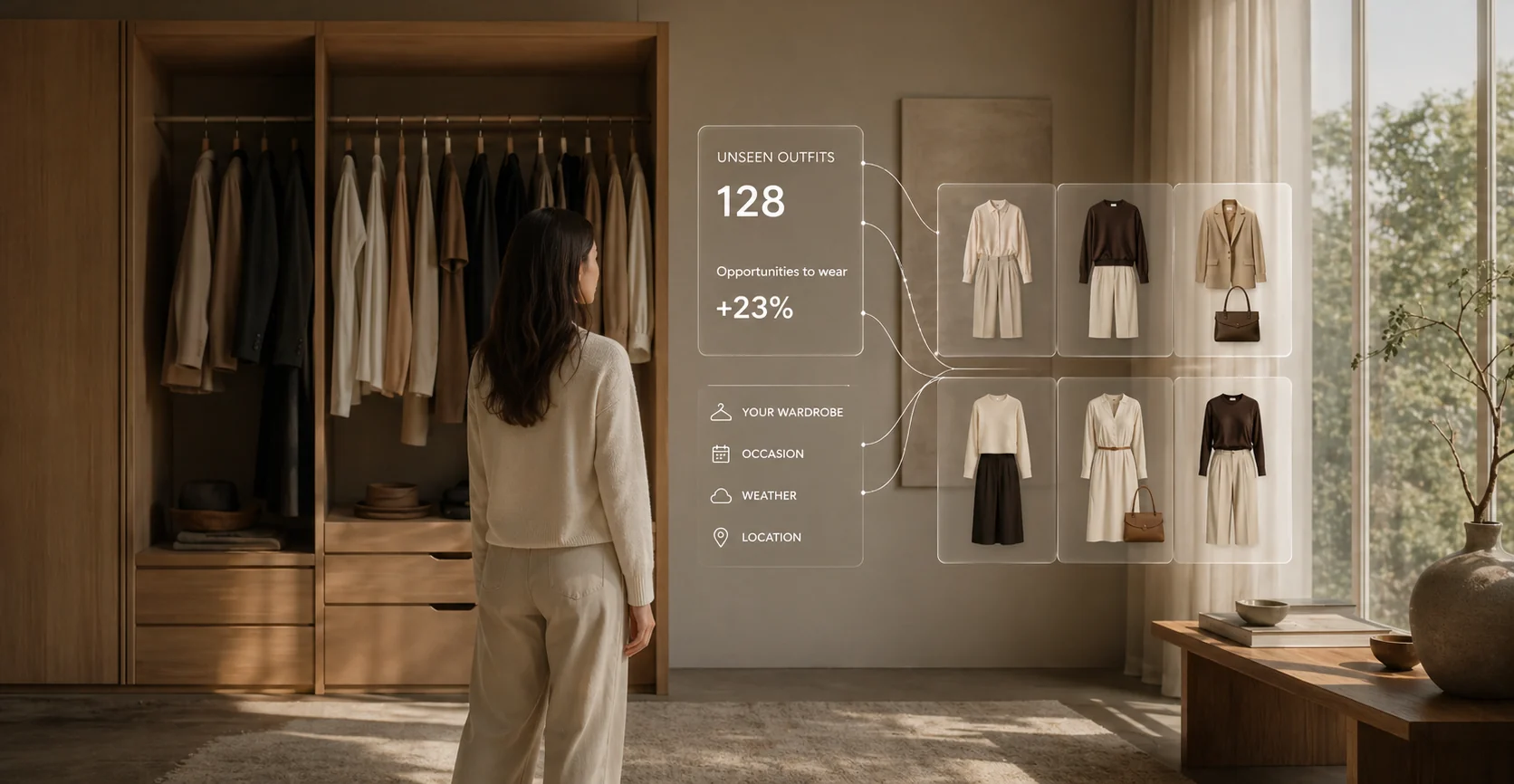
The COORD app is a wardrobe manager built for fashion shoppers, available as a deployable customer benefit for the retailers we partner with. Your customers scan their closet, get styling and sustainability guidance. You see what they own, wear, replace and need across every brand.
Loyalty data shows what they bought from you. Wardrobe data shows what they live with. Different question. Different answer. Different decisions on what to buy, make, merchandise, say.
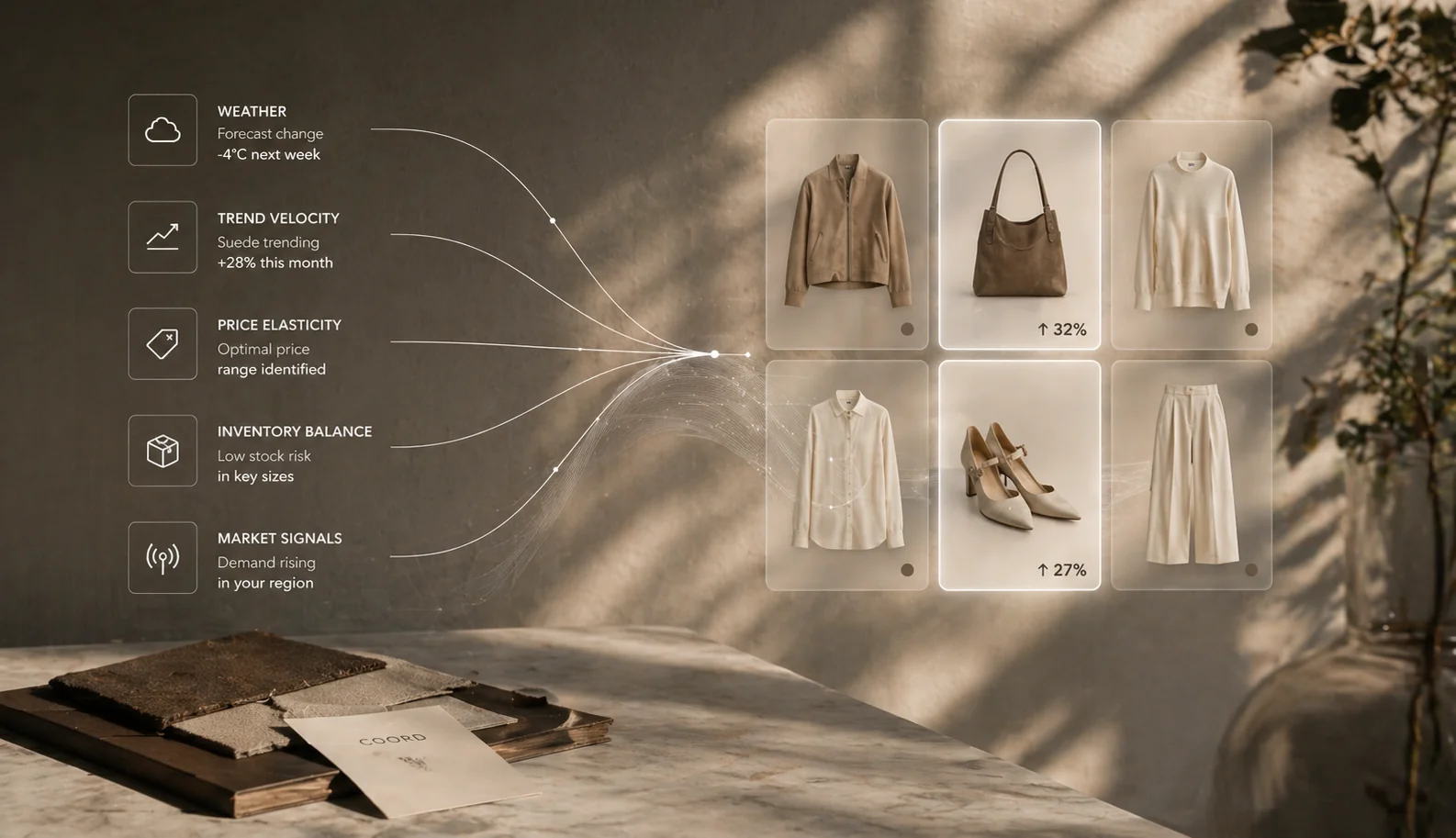
We model actual cause and effect, built for fashion variables: taste, season, weather, social waves, micro trends, influencer moments. One causal engine pulling in every signal that drives demand. Channels most platforms ignore because integrating them is hard.
Tuesday. Your competitor goes out of stock. You run a 20 percent promo. Sales up 30 percent. A correlation tool says the promo drove 30 points, run it again. Causal intelligence decomposes: 12 points promo, 14 points stockout, 4 points weather. You plan to the 12. You hit target.
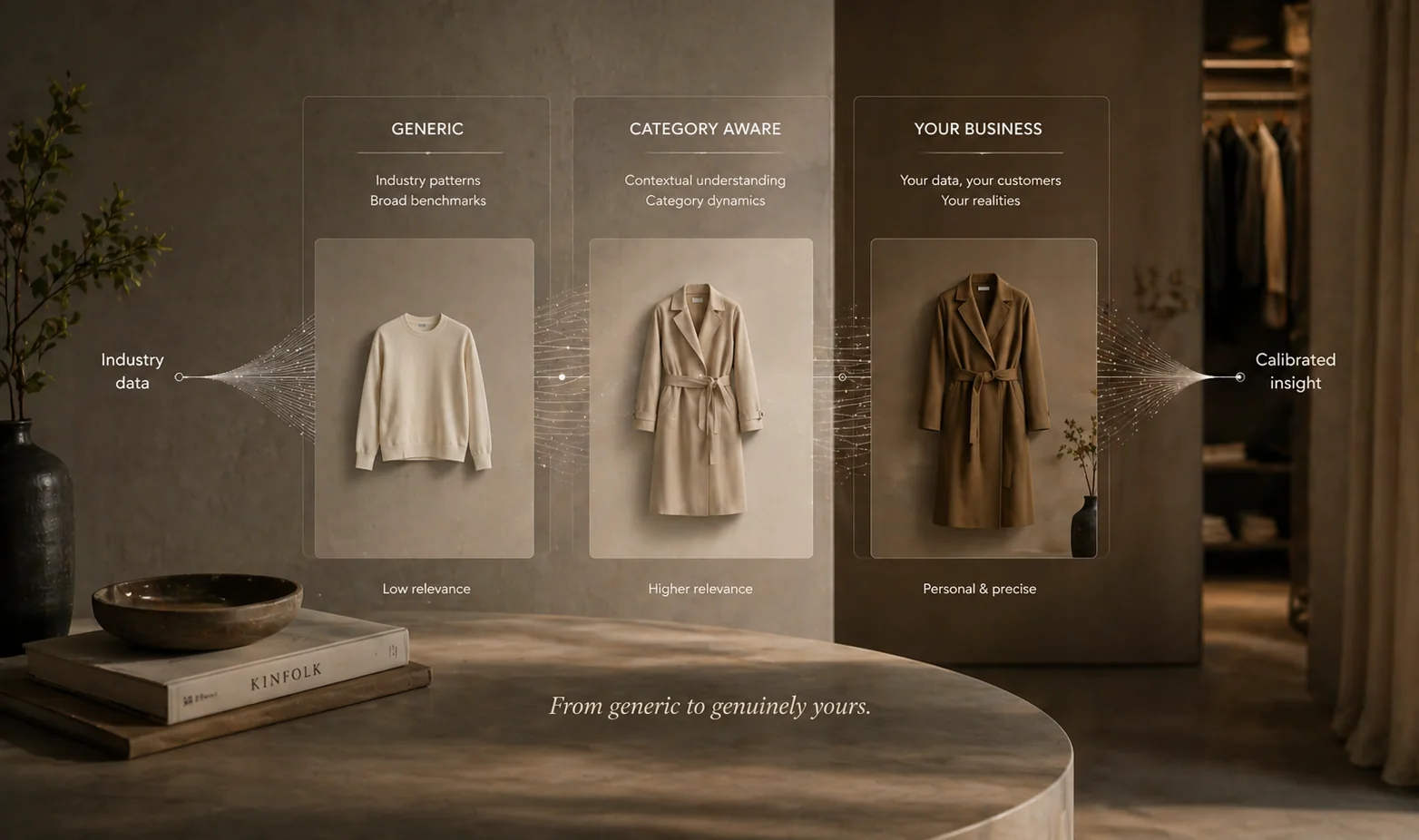
70 percent is pre trained: workflows, decisions, rhythms and rules common to every fashion retailer, captured across 30+ personas, 5+ retailer types, every major product tier. 20 percent is your business: trade cadence, price ladders, sign offs, house style. Calibrated company wide in under four weeks. 10 percent is you: your role, workflow, preferences. Calibrated in seconds via your admin console.
That 30 percent (your business plus you) is what makes the system fit your operating model and fit no one else's. It also captures the operating knowledge your team used to keep in their heads. By month twelve the system has internalised how your business thinks. 70 percent is what we bring. 30 percent is what you bring.
Software vendors hand you a tool and walk away. Consultancies hand you a deck and walk away. We build the strategy with your team, calibrate it into the system, and the system runs it. Week after week. Agent after agent.
You do not buy software. You buy a strategic operating model. With analyst benches cut and consultancy retainers gone, strategy as a service is the only delivery model that fits fashion retail in 2026. Time to value over implementation time.
Sasi brings operating model transformation and commercial growth strategy expertise from his time at EY Parthenon. He knew that to make the best DOS possible, he had to work with the industry leaders and insiders who run fashion retail every day. So that is what he did.
50+ workshops. 100+ operating models analysed. 10,000+ job roles mapped. Synthesised into 30+ personas across 5+ retailer types. Buying, trading, merch, store ops, sustainability, garment tech, paid media, clienteling, supplier ops. We sat in trade meetings. We shadowed briefings. We read pricing committee minutes. Then we built.
Retail decisions get made by teams, not individuals. The DOS speaks the same language at every level. Analyst to director to board. So the call made in the boardroom is traceable back to the data the analyst is working with. Everyone sees the same reasoning.
Your buyers spend half their week in spreadsheets and supplier calls. The DOS shows them which buys to make and why, which to skip, what to reorder and what to exit. Wardrobe perspective reveals demand they cannot see in their own sales data. Every recommendation ranked, reasoned, reviewable.
Weekly trading is the single biggest lever in fashion retail. The DOS runs underneath your Monday trade meeting. Reads sell through, competitor pricing, wardrobe demand and stock position. Surfaces where to hold, promote or clear. You set the cadence in twenty minutes, not four hours.
Allocation, replenishment and range planning, calibrated to what consumers actually own and wear, not to last season's sales. Wardrobe perspective reveals city and region level gaps that sales data alone never shows. Your merchandisers own the plan. The DOS removes the legwork.
Measurable margin improvement, measurable markdown reduction, measurable OPEX saving on teams already cut. The Value Tracker baselines every initiative in week one and reports against it on a methodology you audit. Strategy as a service shows up on the P&L, not in a deck.
Calibration in practice means a list of constraints, conventions and house rules that get programmed into the system in week one and refined every week after. Six examples of what gets baked in for every retailer we partner with.
If your brand is only allowed to sell at certain price points, the DOS only ever recommends within those points. Hard constraint. Built in.
Which brands you can promote together. Which never. Which categories carry house brand priority. Encoded in the recommendation engine.
Your week 14 review. Your week 22 sale. Your end of season clearance. Markdown logic respects your trading calendar, not a generic one.
Who approves what at what value. Buyer to buying director to trading director to CFO. Built into every workflow so nothing routes around governance.
Concession rules, marketplace rules, own site rules, retail store rules. The DOS knows which decisions apply to which channel and which never cross.
Every agent written decision pack, trading note, range brief and customer facing recommendation reads like your team wrote it. Not like a SaaS vendor wrote it.
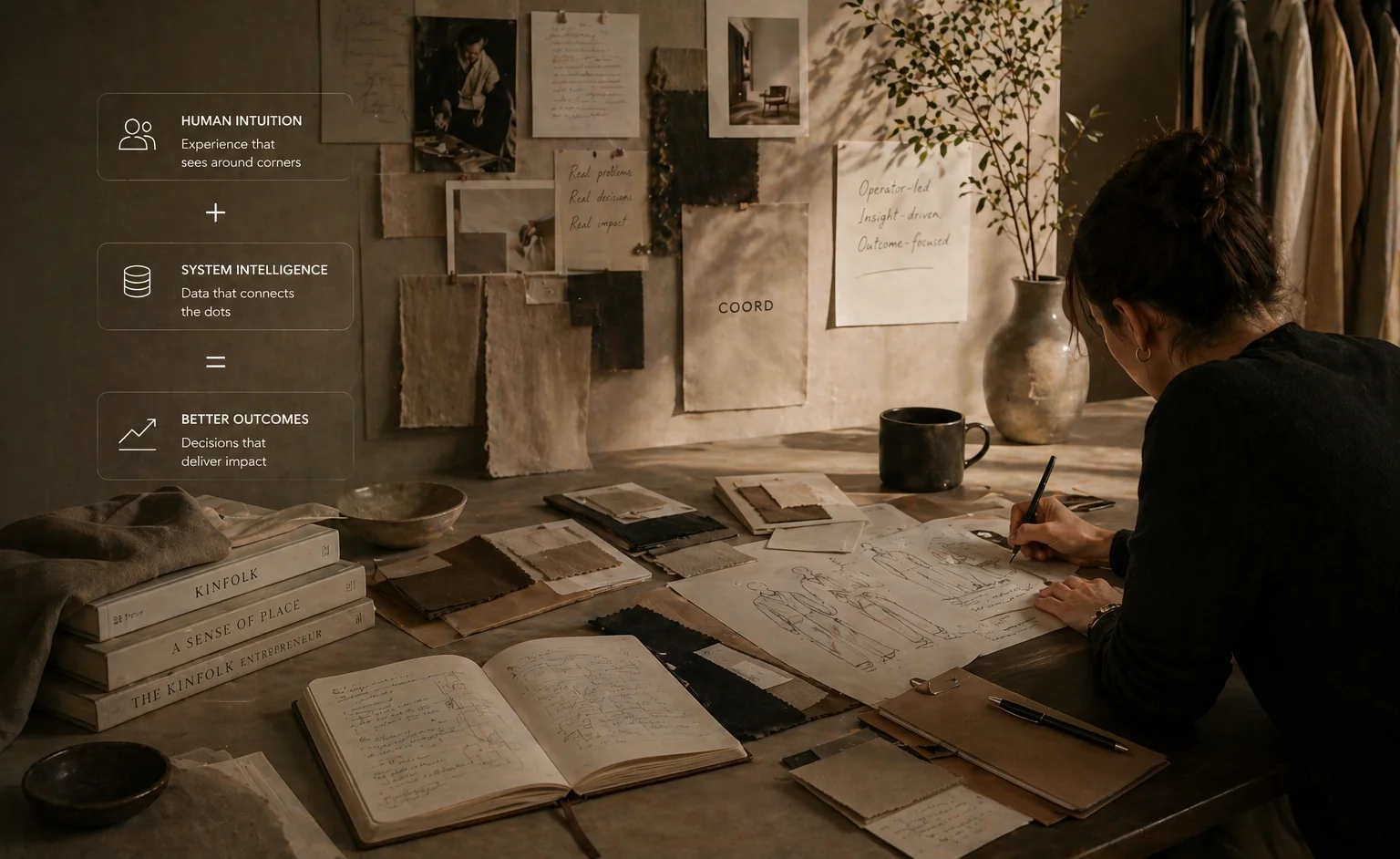
The hardest thing in fashion retail is the knowledge sitting in the heads of your most senior people. The trading director who knows why every brand was delisted. The head buyer who remembers what worked in 2019. When they go on holiday, that knowledge goes with them. When they leave, it walks out the door. Calibration captures it. The system holds it. Your business keeps it.
Karen, head of trading, is on holiday. The Monday meeting still happens. The recommendations still come. The pricing logic still respects the rules she would have applied. The context she would have held in her head sits in the system instead.
A new merchandising director used to take six months of shadowing, mentoring and catch-up to ramp. The system collapses that. New joiners inherit the operating context on day one. They learn the business from the system, not from the people who happen to remember.
Senior people leave. They retire, get poached, take sabbaticals. With the DOS, the operating model they built lives in the system, not just in their heads. Twelve years of trading judgement become a permanent operating asset of the business.
Clean, unified data from every fragmented source you have. The V0 every other module depends on.
End to end critical paths pre tuned to fashion retail. Tailored to yours during onboarding.
Three pricing modes. Elasticity. Discount design. Value based. With floor and ceiling rules per brand.
Sell through, margin and trend tracking across every brand you stock or carry.
Weekly trading, monthly margin, quarterly strategy. Written by the system, signed off by your team.
Real time peer pricing, competitor stock tracking, discount and assortment signals.
Every initiative shipped, including ours, measured against baseline on a methodology you audit. Free with every deployment.
Markdown triggers, dead stock alerts, transfer recommendations across the network.
Wardrobe derived clienteling. CLV cohorts. Know before they walk in. Speak in your voice.
Interactive store mapping with revenue, margin and velocity by zone. Pre launch.
Cross location performance. Stock transfers. New store planning. Concession and warehouse views.
Resale, repair, durability, DPP readiness. Values aligned merchandising, ESG reporting, audit ready evidence.
Your merchandisers still allocate. The DOS does not replace your team. It frees them. From the admin, the spreadsheets, the reporting, the dataset prep. So they can do the work only they can do. Judgement, negotiation, relationships, taste. No new titles. No six month change programme. The first weekly trading meeting that runs through the system happens in week four. Team training is included.
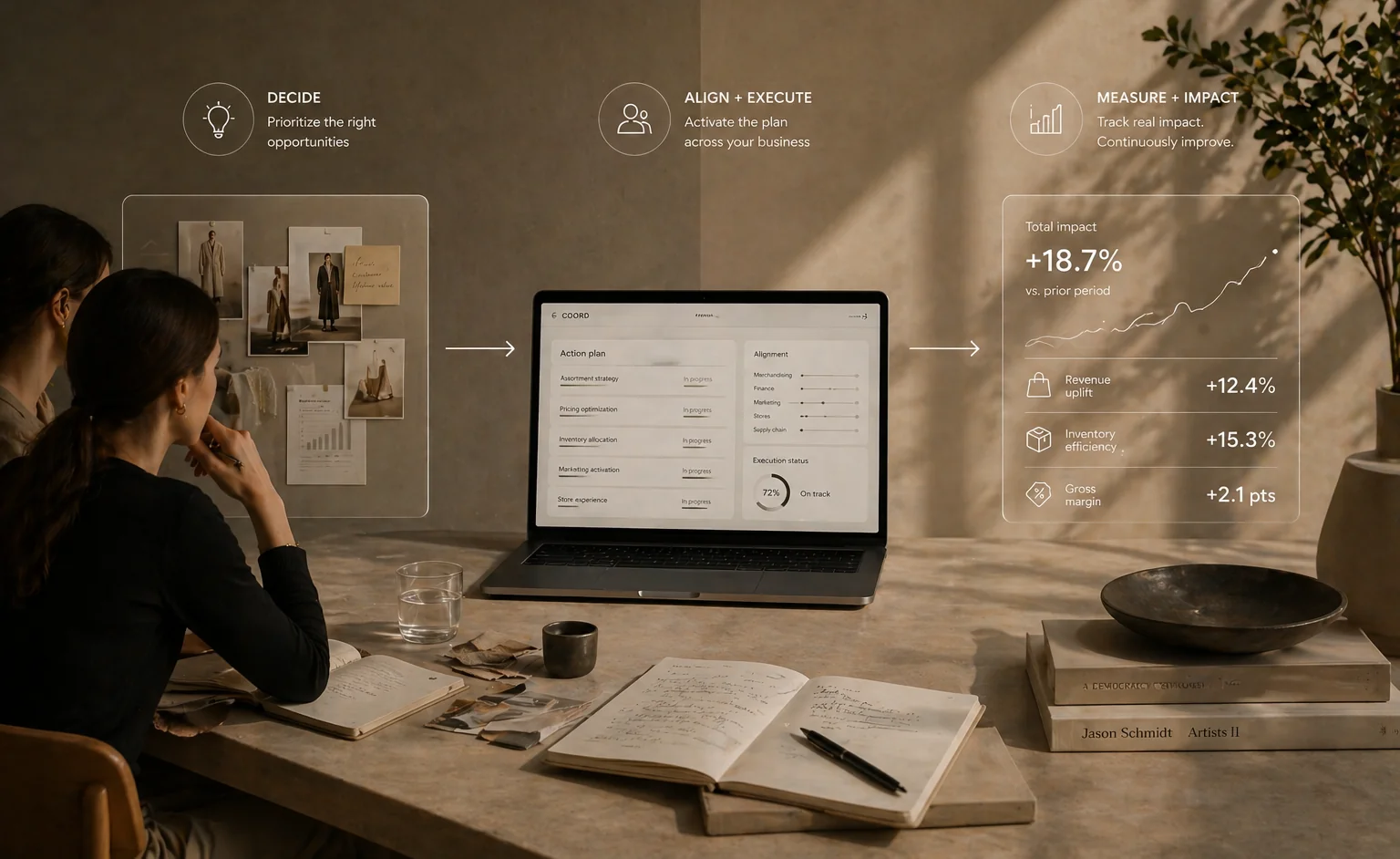
Every engagement begins with a baseline. The Value Tracker measures the delta from that baseline week after week, on a methodology you audit. Indicative ranges below.
Indicative ranges based on deployed solution performance. Your baseline is confirmed in week one. The Value Tracker measures real impact on a methodology you can audit. You see the numbers. You decide on renewal.
The Value Tracker ships free with every deployment. A transparent measurement layer that scores COORD's contribution to your P&L alongside every other initiative, tool and service provider you run. You audit the methodology. You see what moved the number. You decide on renewal. No lock ins. No renegotiation clauses.
Excel to PowerBI. PowerBI to a data warehouse. ERP to ERP. CRM to CRM. Every migration drains two to four years of leadership attention, consultancy spend, and team morale, often with the strategy benefit lost by the time go live arrives. We are live in under four weeks because we are not migrating anything. We sit on top of what you already have. You keep your stack. The orchestration layer goes above it. Per user calibration takes seconds.
Every engagement begins with understanding your business, your KPIs and your definition of good. Then we build.
We are selective about who we work with because the DOS only works when we build it together. Fewer than ten retail partnerships in parallel. If you are serious about transforming how decisions get made in your business, we would love to hear from you.
Book a 30 minute conversation →